

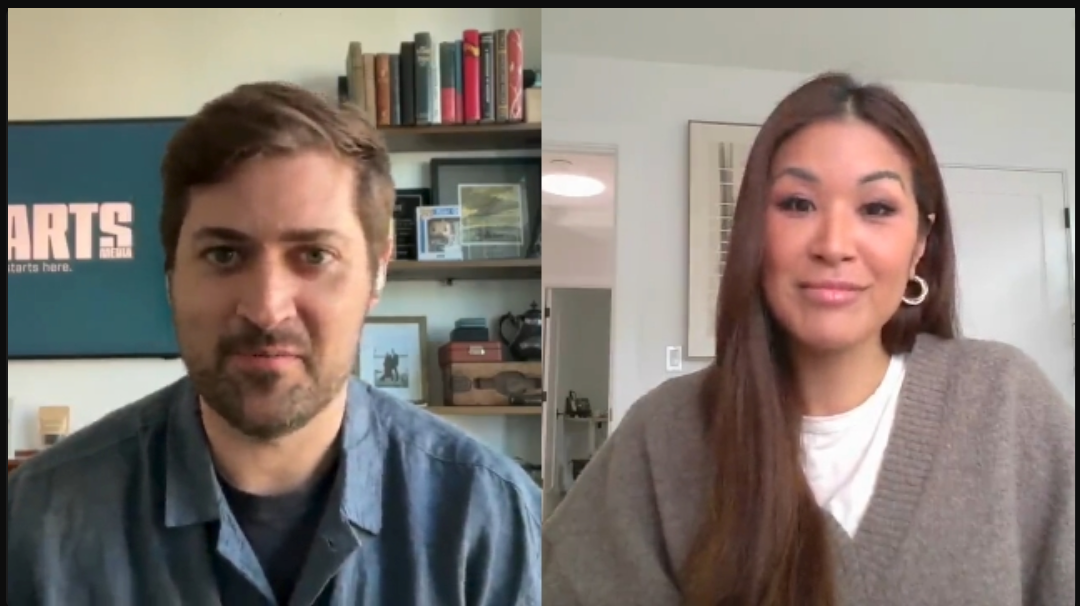
The founder and editor of Upstarts Media sits down with host Maria Cid Medina in Episode 7 of NewsBreak’s Behind the Byline podcast. In this conversation, we explore his journey from a Harvard student with an Indiana Jones ambition to an entrepreneur navigating an era of AI-driven disruption and the shifting landscape of the media industry.
This transcript has been condensed for clarity.
You’ve often joked that your early career ambitions involved being Indiana Jones. How did that translate into a career in journalism, and how did you navigate the early challenges of breaking into the industry?
I studied pretty much every Harvard class you would think an Indiana Jones would need, but I eventually had to hard pivot into a place that would actually pay me to do what I love: telling stories. Breaking in required a certain level of persistence. I was fortunate enough to have connections to a couple of Pulitzer Prize-winning journalists, but when I reached out to them for advice on how to kickstart my career, the consistent feedback I received was: "Don’t do it."
That feedback actually made me stubborn. I felt like the successful players were simply pulling up the ladder behind them, so I decided to figure it out myself. I also learned early on that journalism requires building up "calluses." You have to force yourself to cold-call or write to people who will likely tell you to buzz off. It is difficult to always be liked and simultaneously be good at this job.
So you ignored the naysayers and got an internship?
Yes, I was an intern for Fortune Magazine in New York. And I found out that no intern had ever been published in print there. I made that my personal mission. I eventually hitched my wagon to a phenomenal veteran reporter, Roger Parlov, who writes about big lawsuits. When a massive project came along that was too large for the main writer, I raised my hand and was aggressive, saying, "I'll do the baby piece." I just tried not to screw it up. I pulled it off with a one-page article, and they offered me a job.
That was not an easy goal! How did you actually accomplish it? What did you write about? How did you get that in front of editors and get it approved?
I think as a journalist—especially in tech reporting, but probably also politics and lots of other areas—you can either be a "heat-seeking missile" chasing buzzy, high-competition topics, or you can look for the "green fields": the areas nobody is paying attention to. In 2009, most tech reporters were focused on the West Coast, so I focused on the New York City startup ecosystem. I wanted to cover the companies people used but weren't getting enough attention, like ZocDoc or Foursquare.
I ended up going to Forbes 18 months after I started at Fortune. I worked my way from the most thankless job, editing the homepage. And I just tried to do that as fast as I could in the day so I could do some reporting in the afternoon. By proving my value as a reporter, I got put on the tech beat at Forbes. And that allowed me to cover incredible stories, from the contentious early days of Uber and investor Chris Sacca, to traveling the world for a cover story on Mark Benioff. I also had the chance to meet Melanie Perkins, the CEO of Canva. I actually had to fight to put her on the cover of Forbes because the editors were nervous about a less proven company, but I told them, "Trust me, or I will fall on this sword." Now, she’s been on the cover of most business magazines, and I'm always proud that we were able to lean into that one.
After twelve years at Forbes, you left all of that behind to start your own business. What were you thinking when you put in your notice?
I had these restless moments where I asked, "Is this the best use of my time?" I didn't want to look in the mirror and realize I had spent ten years just doing the same stuff as the previous ten. Professionally, I felt traditional media was being sucked into covering the same big billionaire names over and over. I wasn't interested in being reporter number 500 on the Elon Musk beat.
Starting my own thing allowed me to control which stories I want to cover and showcase people who might be getting overlooked. But as a founder, the biggest adjustment was realizing you are essentially sprinting a marathon at all times. At Forbes, I was a big game hunter; if I delivered a big story, I could retreat. As a small business owner, you can't rest on your laurels.
As you transitioned into entrepreneurship, did any of the veterans you interviewed provide guidance that shaped how you run Upstarts?
I interviewed the 80-year-old CEO of Esri, a company that provides the geospatial software underpinning much of the world's maps. He is a very low-profile, high-value entrepreneur, and he gave me advice that I take to heart. He told me that you will think there is one big problem facing you each day, but the reality is that it is the twenty little annoying things you are putting off. If you consistently force yourself to execute on those twenty little things, your business will be more successful. I try to apply that every day at Upstarts.
With the rapid integration of AI into almost every facet of our lives, how do you see these tools fitting into the future of journalism without eroding the trust readers place in human creators?
I believe AI can be an incredible asset for research and production—helping with prep work, like asking “What is a question this CEO has answered a hundred times?” so I can avoid being the one-hundredth-and-one—but I don’t want it involved in the writing itself. My readers have a relationship with me based on a track record of trust. If you start to outsource that, even to a human ghostwriter, you are not delivering on your promise to your audience.
There is a significant risk for large organizations that might be tempted to automate routine reporting. It is a slippery slope; if you automate until you no longer stand for anything, readers will eventually reject you. If a news organization isn't willing to put human effort into a story, why should a reader put human effort into reading it?
As we see more journalists leaving traditional newsrooms to start their own ventures, where do you see the landscape heading?
I hope Upstarts can serve as an example that new brands and voices can shine through quality reporting. The world needs more quality reporting, yet there are fewer people qualified to ask the tough questions. The structural reality is that many traditional publications struggle to remain profitable while rewarding their star talent. This tension is why you see so many of us saying, "We'll just do it ourselves." We will make it work by finding our own audiences and taking our work into our own hands.
Tap to listen or watch:
Spotify: https://open.spotify.com/episode/6dsya1W5EBr1sX5bbJDkbK?si=vNhz6vN-TSy4KQOvfnS-kg
Apple: https://podcasts.apple.com/us/podcast/sprinting-a-marathon-alex-konrad-on-building-a-media-brand/id1852571624?i=1000773467088
YouTube: https://youtu.be/czPz49EfFOk


